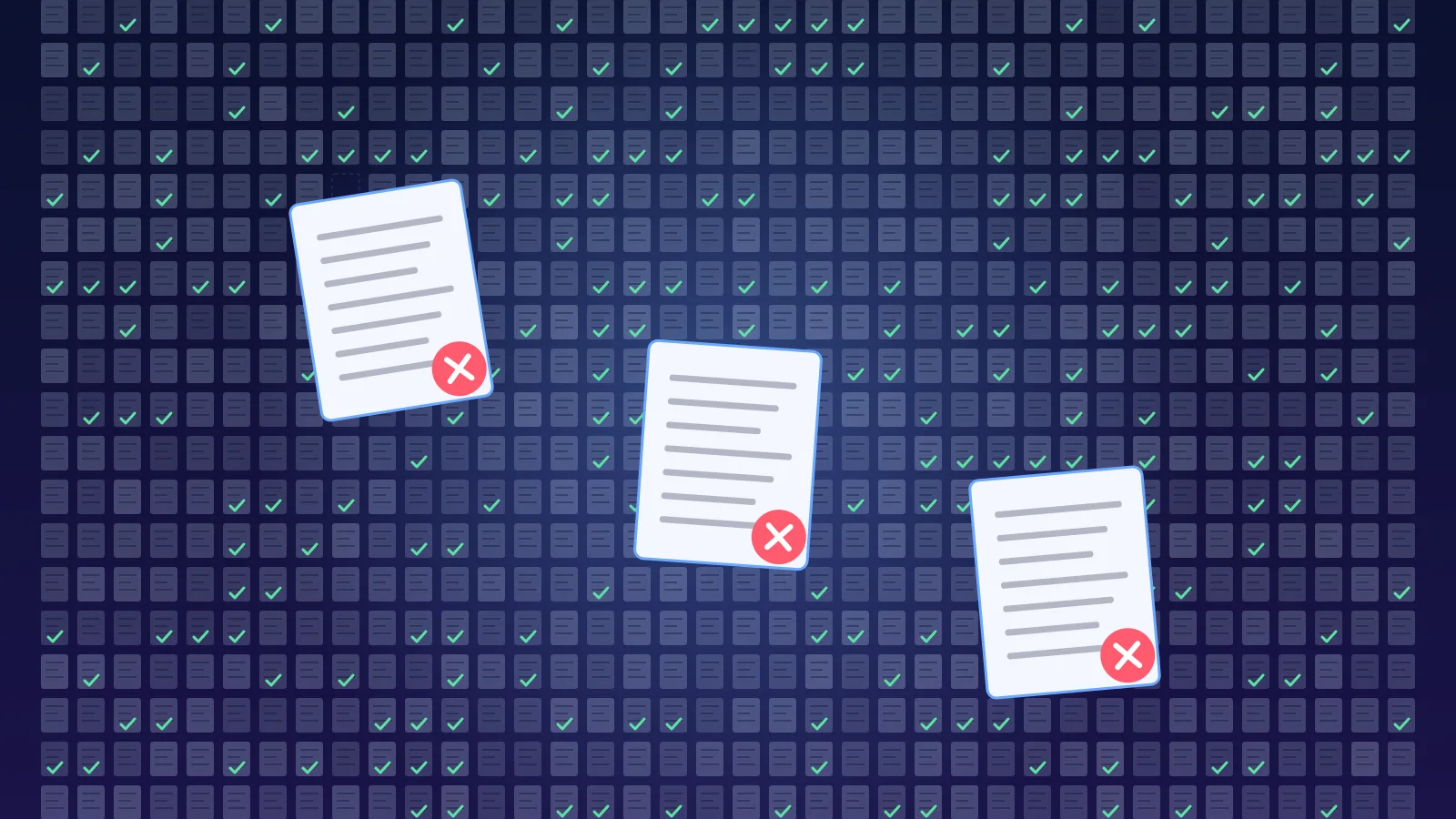
On October 6, OpenAI put 722 math manuscripts on GitHub. It says an internal model wrote them. By the next day, three had been withdrawn.
What OpenAI released
According to Nature’s report, the papers claim progress on 372 open problems in geometry, algebra, and computer science. The model is not public. Nature reports it was pointed at roughly 4,000 problems and spent about three hours of thinking time per result. A spokesperson told Scientific American that almost every result came from a single prompt to a single agent. This is different from September’s Navier–Stokes claim, which OpenAI said used about 10,000 agents over 88 hours.
These numbers come from OpenAI and from news reports about it. They have not been independently verified.
What went wrong first
On October 7, OpenAI withdrew three manuscripts. A sign error broke one argument, and two papers that depended on it fell with it. One was titled “The rational Hodge conjecture for products of K3 surfaces.” Fourteen more were revised, and the collection fell to 719 manuscripts.
How much is machine-checked?
Lean is software that checks a proof step by step. Reports disagree on how many results have a Lean proof. Quanta reported about 42%, and rising. AI Weekly counted only 162 of the 722 manuscripts. The differences come from counting papers or results, and from the date of the count. On October 21, OpenAI said results are at different stages of verification and that many, but not all, are formalized. Treat unchecked results as unverified claims.
What mathematicians said
- Andrew Sutherland (MIT) told Scientific American to expect some proofs to contain mistakes, possibly serious ones. He called the quick withdrawal the responsible thing to do.
- Michael Harris (Columbia) told Nature he would not spend time on the papers and called the process “illegitimate.”
- Ursula Martin (Oxford) said the release tosses the community a messy first draft.
- Daniel Litt (Toronto) argued that sharing the answers is better than keeping them secret.
OpenAI says an advisory group of mathematicians recommended releasing the results before full formalization. According to Nature, the batch did not solve any of the Millennium Prize Problems.
What to watch
Look for independent checks of the Lean proofs, more withdrawals, and whether OpenAI releases the model so others can reproduce the results.
Sources
- Sharing AI progress in mathematics (OpenAI) (primary)
- OpenAI drops 722 AI math preprints, three pulled over a sign error (AI Weekly, citing Nature) (secondary)
- OpenAI drops 722 math manuscripts from an unreleased model (NYU Shanghai, citing Scientific American) (secondary)
- OpenAI withdraws 3 math papers after 722-paper dump (Tech Insider) (secondary)
- OpenAI posted 722 maths papers. Three lasted a day. (Manusights) (secondary)